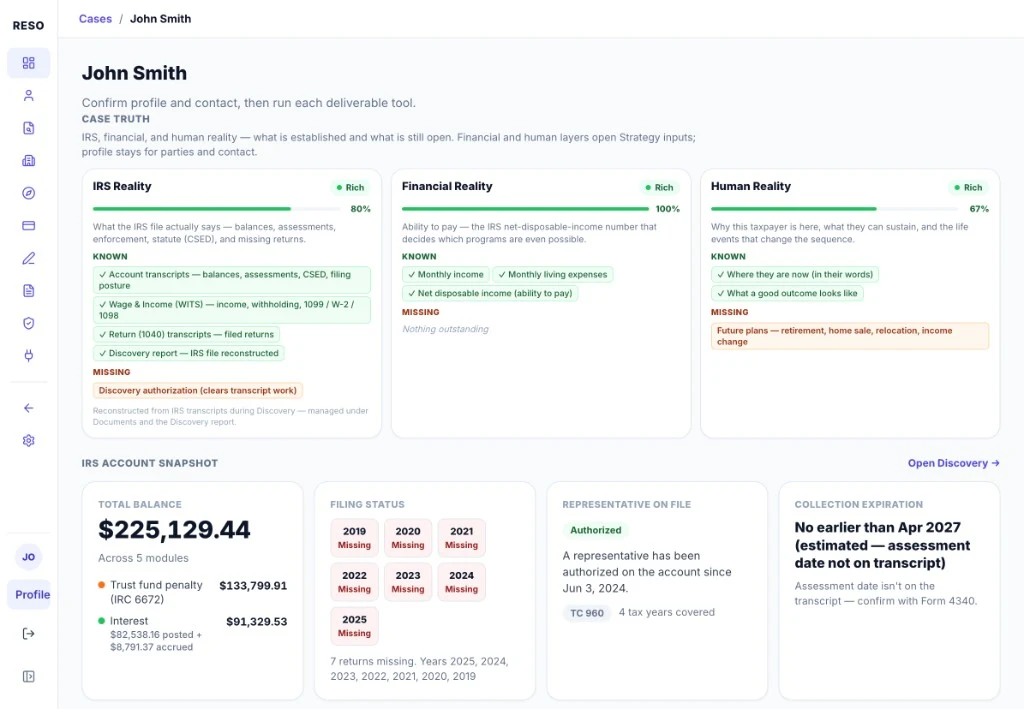
At a glance
Discovery before you promise implementation
Most fee disputes start before the first form is filed — when the firm quoted from incomplete information. Discovery is the paid advisory phase where IRS posture, urgency, and program fit are documented before implementation labor begins.
Sell Discovery and Strategy — or use them to close implementation.
Most firms give the analysis away to win the engagement. Brevitax turns the entire advisory phase into products: Discovery Intelligence, then Resolution Strategy — two paid, defensible deliverables your firm sells and retains before any implementation agreement is signed. And if your firm doesn’t sell exploratories, the same Discovery works the other way: strong enough to close Strategy and implementation on findings instead of promises, and to stand later as the record of value delivered.
- Bill the diagnosis. Discovery is a deliverable, not a sales expense.
- Bill the plan. Resolution Strategy is the second paid deliverable — sold and retained before implementation begins.
- Don’t sell exploratories? Run the same Discovery uncharged — it closes implementation on findings and defends the value after.
- Quote implementation from evidence — the IRS file, not the client’s memory.
What Discovery includes
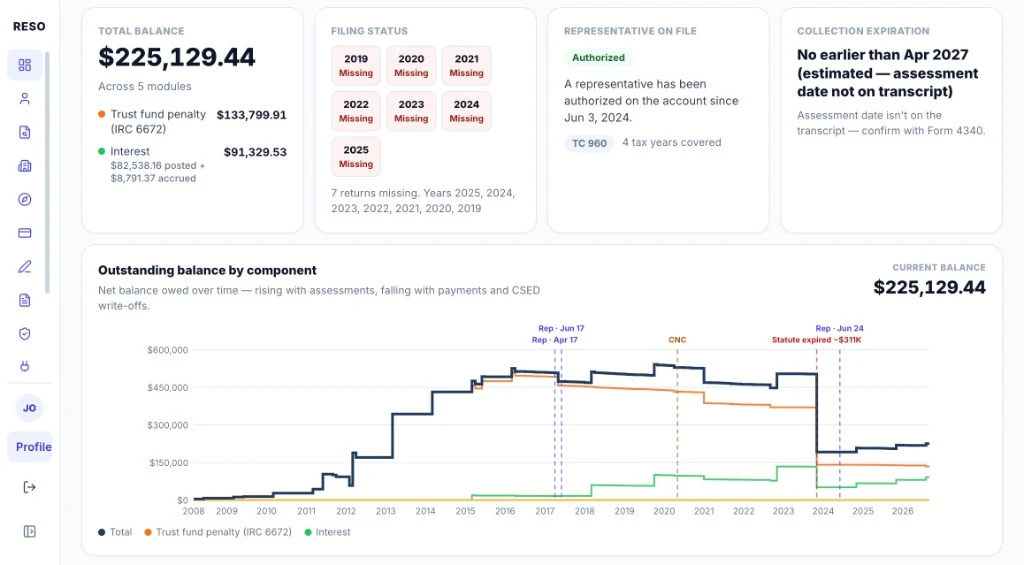
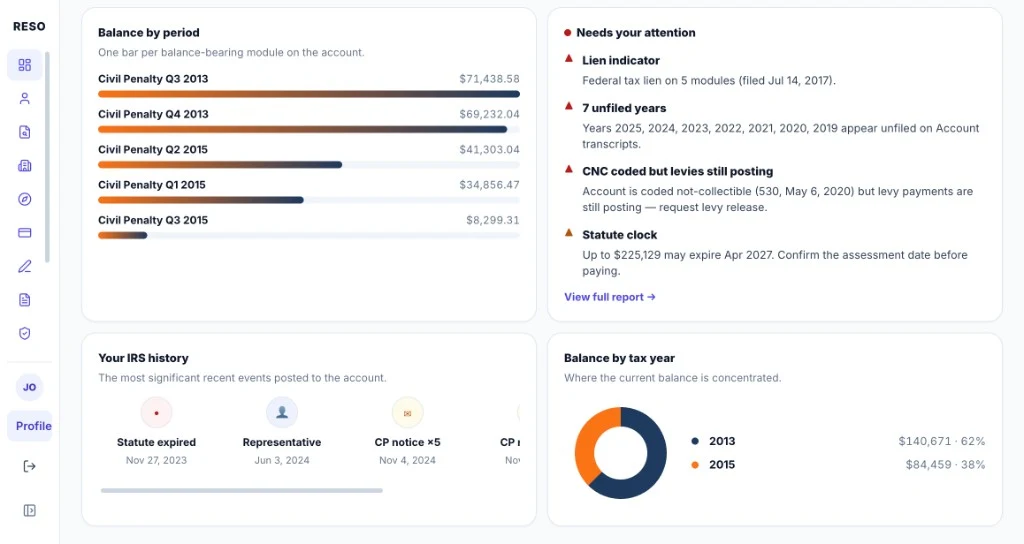
- IRS ledger evidence: balances, CSED windows, liens, levies, enforcement signals
- Program fit and priority flags grounded in transcript data — not client memory
- Co-branded work product your firm presents, scopes, and bills
- One case record that carries forward into strategy and implementation
Operational win
A more repeatable practice is a more profitable practice.
- Productized Discovery → more Discovery revenue per case
- Consistent methodology → fewer bad quotes · less partner rework
Not a transcript dump
Brevitax doesn’t help firms read transcripts. It helps firms build a repeatable, defensible tax resolution practice.
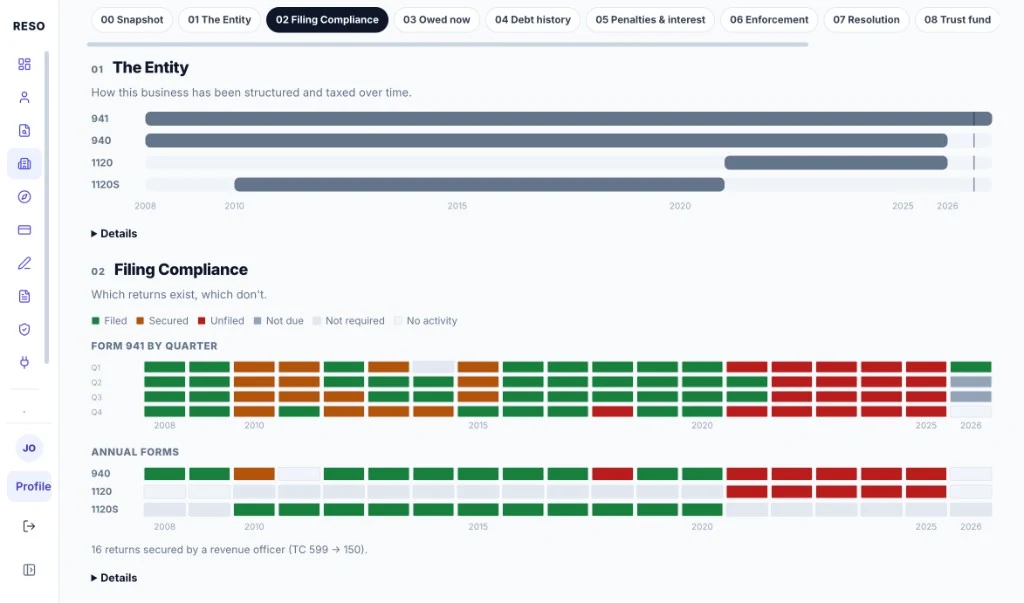
Business transcripts
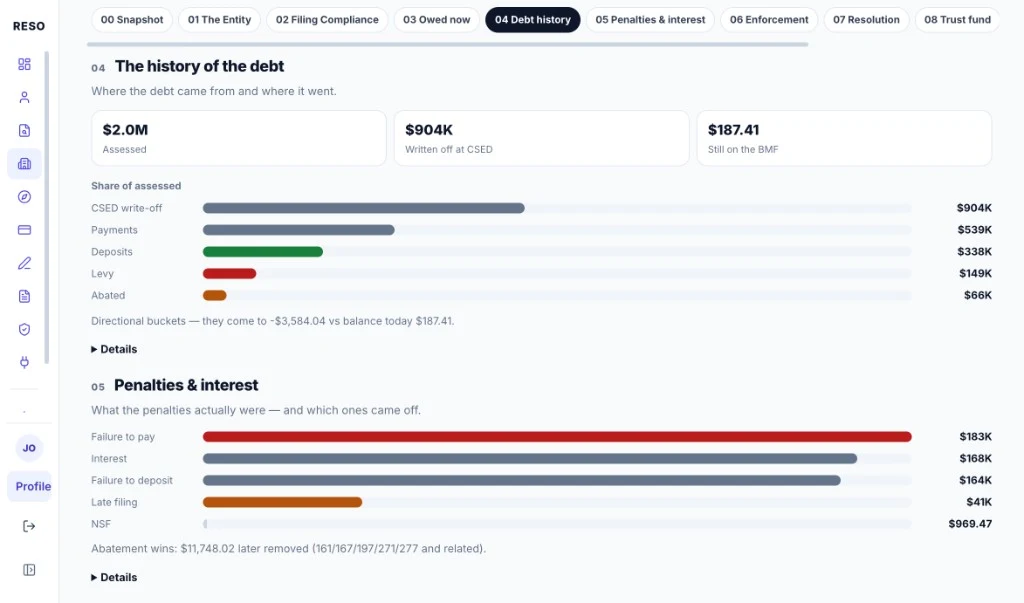
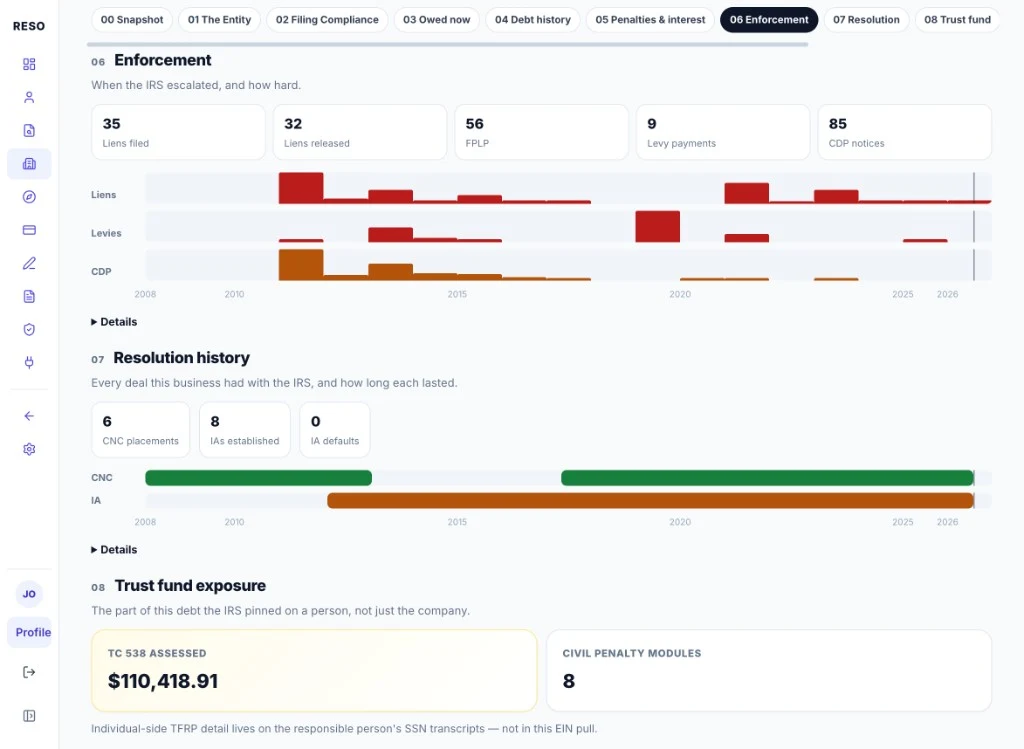
This page is Personal Transcript Discovery (IMF). When the taxpayer is a business, the file is BMF — 941 quarters, 940 and 1120, liens, CNC/IA, and TFRP. That reconstruction is Bus. Discovery.
Where this stage fits
Discovery is where a tax resolution case becomes legible. Before you quote a program or promise an outcome, the firm needs a governed read of balances, filing posture, enforcement signals, and missing records.
Why a single case record matters
Tax resolution work fails in the gaps between tools: transcripts in one folder, notes in another, Strategy in Word, billing in a CRM. Brevitax keeps IRS reality, financial qualification, recommendations, execution, and verification on one governed case record so staff do not re-derive the story every time someone opens the file.
- Tier IRS transcript facts stay authoritative for balances, liens, and posting sequence.
- Tier 433 economics stay separate from ledger truth so NDI and ability-to-pay framing stay honest.
- Client story and operator notes layer on top without replacing transcript facts.
What good documentation looks like
Firms that scale resolution revenue document decisions at the moment they happen — not in a cleanup pass before a client complains. That means dated deliverables, explicit program choices, and refresh discipline when the IRS account moves.
How Brevitax fits your firm
Brevitax is built for enrolled agents, CPAs, and resolution firms that sell Discovery, Strategy, and ongoing representation. Start with Pro for practitioner-led cases, or adopt Enterprise when Pulse, Cases, Manage, and Decision Coverage need to run as one operating system.
Common questions
Does Brevitax replace my CRM?
No. Brevitax owns transcript-led deliverables and case truth. Most firms keep their CRM for pipeline and tasks while using Brevitax for Discovery, Strategy, and verification.
Can multiple staff work the same case?
Enterprise supports team workflows, permissions, and Decision Coverage. Pro is practitioner-led with unlimited cases per seat.