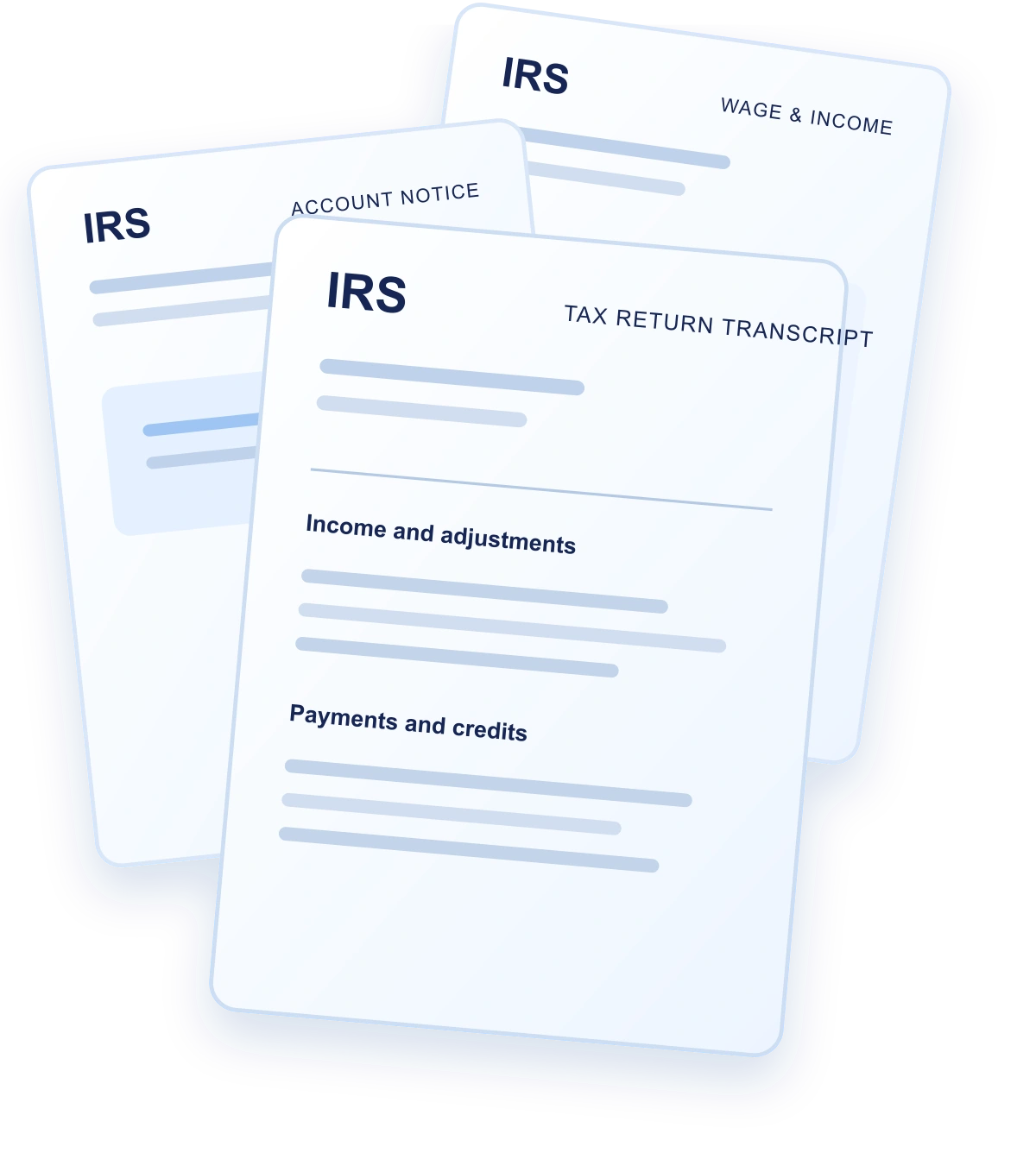
Identify the notice
Find the code, year, and deadline.
IDENTIFY. COMPARE. UNDERSTAND.
Identify the letter, connect it to the relevant tax year, and compare it with current IRS account activity.
Brevitax helps you organize notices alongside balances, payments, filings, and transcript events so you can see what the letter may be responding to—and what deserves attention next.
7-day trial · card required · cancel anytime. Results in 24–48 hours.
A notice is a point-in-time message. Start with the letter, then verify the current record.
Reviewed August 2026 · Joseph Lancaster, Founder
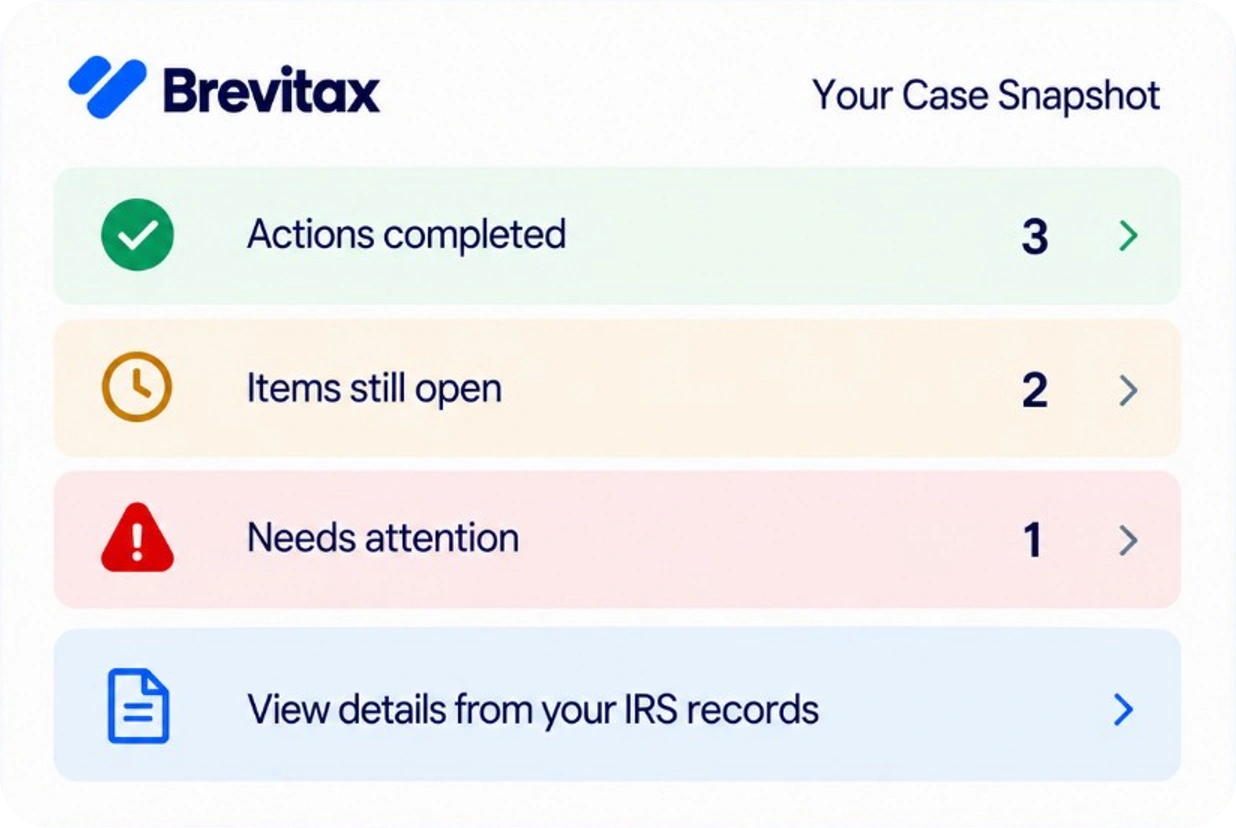
Find the code, year, and deadline.
Compare the letter with IRS records.
Review payments and later activity.
Separate urgency from uncertainty.
Start with the notice itself. The notice number, tax year, issue date, response deadline, balance, and explanation determine what the IRS is communicating. Keep every page and envelope together.
Common notices address unpaid balances, missing returns, proposed changes, payment-plan defaults, or collection action. Two letters that look similar can require very different responses.
An IRS notice reflects account information at the time it was generated. Current account records can help you see whether a return, payment, credit, adjustment, or collection-related event posted before or after that date.
Match the notice to the same tax year and account. A payment on one year does not resolve a balance on another, and a recently submitted return may not appear until processing is complete.
Another letter does not automatically mean your payment, filing, or representative did nothing. Notices can be produced before a recent action finishes processing, and automated collection sequences may continue while systems update.
Other explanations are also possible: a payment went to another period, only part of the balance was addressed, a submission was rejected, or another filing requirement remains open. Verification helps separate timing from a genuinely unresolved issue.
Any stated deadline matters, but certain collection and deficiency notices can carry more immediate consequences. Final intent-to-levy notices, levy notices, proposed assessment notices, and installment-agreement default notices deserve prompt review.
Examples can include CP504, LT11, CP90, CP3219A, and CP523. The notice, current account, prior correspondence, and actual procedural posture should be reviewed together rather than relying on the code alone.
Read the entire notice, verify that it applies to you, and note the response date. Gather the return, payment confirmation, earlier notices, and current IRS account information for the same period.
Then compare what the notice says with what the account now shows. If the records do not resolve the issue—or the matter is urgent, disputed, or complex—contact the IRS using verified contact information or consult a CPA, enrolled agent, or tax attorney.
Brevitax helps organize the notice in the context of the underlying IRS account. You can see balances by year, review filing and payment activity, and identify account events that may explain why the letter was sent.
That clearer record can help you prepare a more focused IRS call, understand whether updated information is needed, or give a licensed professional better-organized facts to review.
Brevitax is software that helps taxpayers organize and understand IRS account information. It is not a tax relief or debt settlement service and does not represent taxpayers before the IRS.
Read every page, identify the notice number and tax period, record the response deadline, and gather relevant returns, payment records, prior letters, and current IRS account information.
Not necessarily. IRS notices cover many issues, including balances due, missing returns, payment-plan matters, proposed changes, identity questions, and collection activity. The notice code and explanation identify its purpose.
The notice may have been generated before the payment posted, the payment may have gone to another tax period, or a remaining balance may still exist. Compare the payment confirmation with current account activity by year.
Transcripts can show account events behind many notices, but they may not contain every detail in the letter or every procedural fact. Review the notice and account records together.
No. Brevitax organizes and explains IRS account information. It does not represent taxpayers before the IRS through this product or replace professional advice when representation is needed.
Review the letter alongside current balances, filings, payments, and account activity before deciding what deserves attention next.
Review My IRS AccountIf you received a notice or owe back taxes, begin with what the IRS has actually posted. Brevitax organizes account transcripts and explains enforcement posture before you commit to a program or firm.
Marketing pages summarize common situations. Your account may differ. Use a current transcript and, when appropriate, licensed representation before filing or agreeing to a collection alternative.