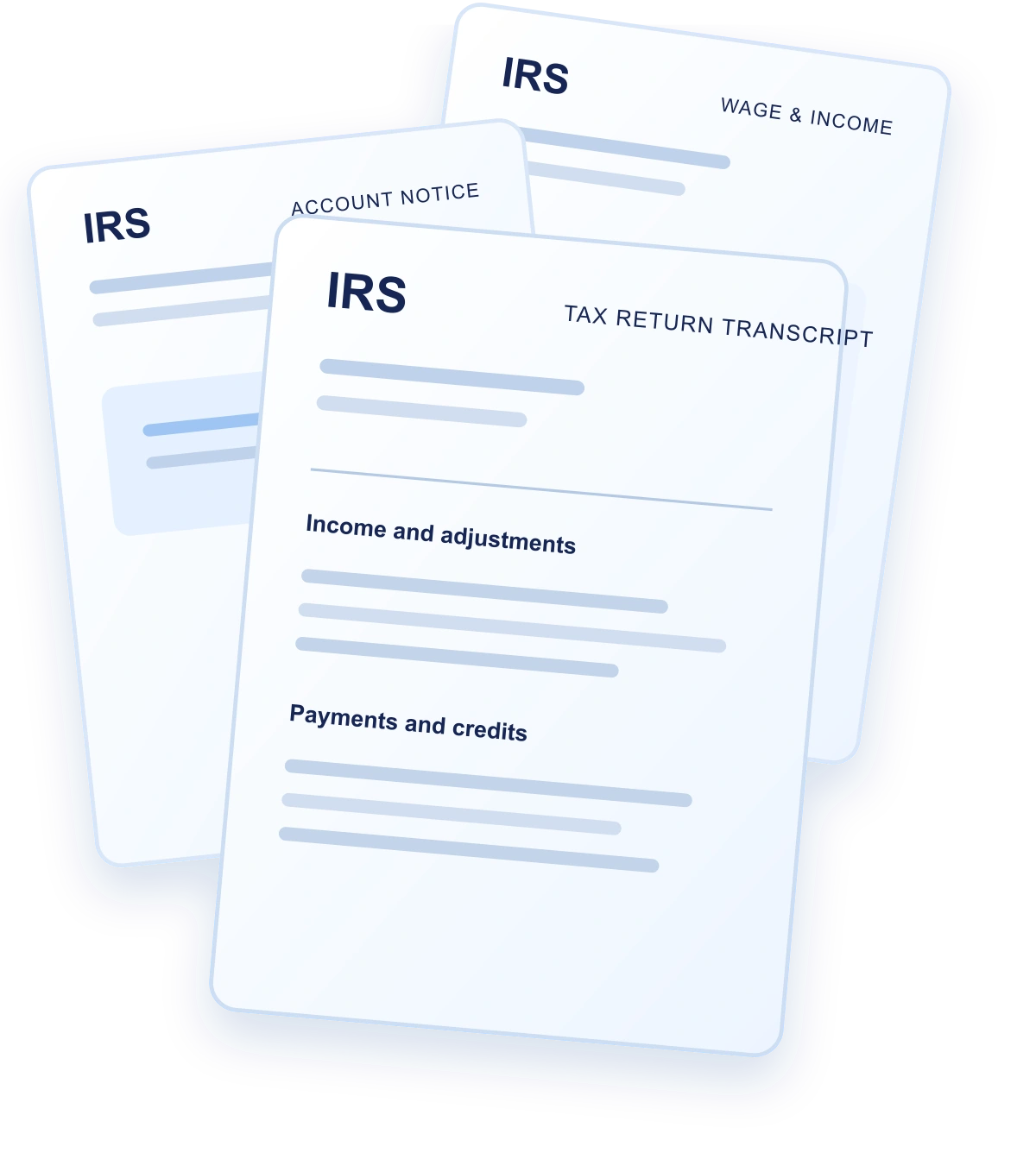
Balances by year
See which tax periods are involved.
START WITH THE IRS RECORD.
See balances by tax year, assessments, penalties, payments, notices, and account activity in one organized view.
Brevitax helps you understand how the balance developed and what may still need attention before you choose a payment, resolution, or professional-help path.
7-day trial · card required · cancel anytime. Results in 24–48 hours.
Built for taxpayers who want the facts before making another financial decision.
Reviewed August 2026 · Joseph Lancaster, Founder
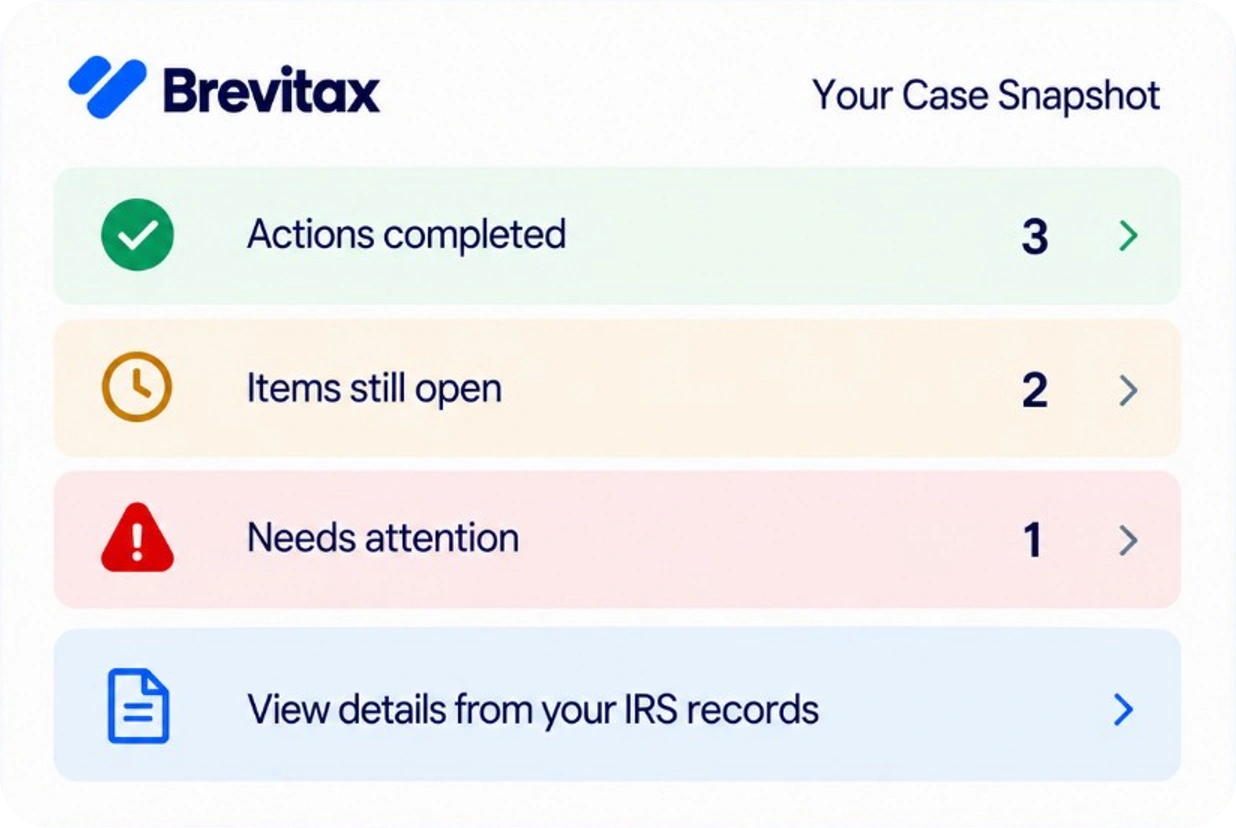
See which tax periods are involved.
Understand how the balance changed.
Connect letters to account activity.
Decide from the current record.
“I owe the IRS” can describe one balance or several separate liabilities across different tax years and tax types. A single total does not show which years are involved, what posted, or why the amount changed.
Current IRS account records can help you review each tax period separately. That year-by-year view is the starting point for understanding the problem before discussing payment options or hiring someone to resolve it.
IRS balances can change after a notice is issued. Interest may continue to accrue, penalties may post, payments may be applied, and adjustments can affect individual years differently.
A payment can also land on a different tax period than expected. Reviewing the posting sequence by year helps distinguish a growing balance from a payment-allocation issue, a recent assessment, or ordinary timing.
Tax debt is not one undifferentiated number. Each year has its own filing history, assessments, payments, notices, and collection timeline. One year may be moving while another remains unresolved.
Brevitax organizes transcript activity into a clearer account history so you can see which periods contribute to the total and which facts deserve a closer look.
Being unable to pay in full does not tell you which IRS program, if any, fits your situation. Payment and resolution paths depend on the verified account, filing compliance, household finances, collection posture, and other facts.
Possible paths can include paying in full, an installment agreement, temporary currently-not-collectible treatment, an Offer in Compromise, penalty-relief review, or professional representation. The right evaluation begins after the balance and filing posture are understood.
Transcripts can show many account events, including filings, assessments, payments, credits, adjustments, and certain collection-related transaction codes. They provide a stronger factual starting point than memory or an outdated balance letter.
Records do not automatically choose a resolution program or capture every legal and procedural fact. Active levies, Revenue Officer involvement, payroll tax issues, disputed liabilities, or urgent deadlines may require direct professional review.
Brevitax turns IRS transcript data into balances by year, a readable account timeline, notice context, and a clearer list of open items. You can review the record yourself or use the organized information in a conversation with a CPA, enrolled agent, or tax attorney.
The goal is not to push every taxpayer into tax relief. It is to help you understand the current IRS reality before deciding what action or level of help makes sense.
Brevitax is software that helps taxpayers organize and understand IRS account information. It is not a tax relief or debt settlement service and does not represent taxpayers before the IRS.
Review current IRS account information by tax year and tax type. Compare balances, assessments, payments, credits, penalties, and interest rather than relying only on one aggregate number or an older notice.
Interest and penalties may continue to accrue, additional assessments can post, or the notice may reflect an earlier account date. Current records help show what changed after the notice was produced.
The appropriate next step depends on filing compliance, verified balances, household finances, collection posture, and other facts. Some situations may fit a payment or resolution path; others warrant professional advice.
Transcripts can show assessments, payments, credits, adjustments, penalties, interest-related activity, and filing events. They may not explain every underlying tax issue without the return, notice, or additional records.
No. Brevitax is software for organizing and understanding IRS account information. It is not a tax relief company and does not represent taxpayers before the IRS through this product.
Organize IRS balances, account activity, and open items by tax year so your next decision starts with the current record.
See What I OweIf you received a notice or owe back taxes, begin with what the IRS has actually posted. Brevitax organizes account transcripts and explains enforcement posture before you commit to a program or firm.
Marketing pages summarize common situations. Your account may differ. Use a current transcript and, when appropriate, licensed representation before filing or agreeing to a collection alternative.