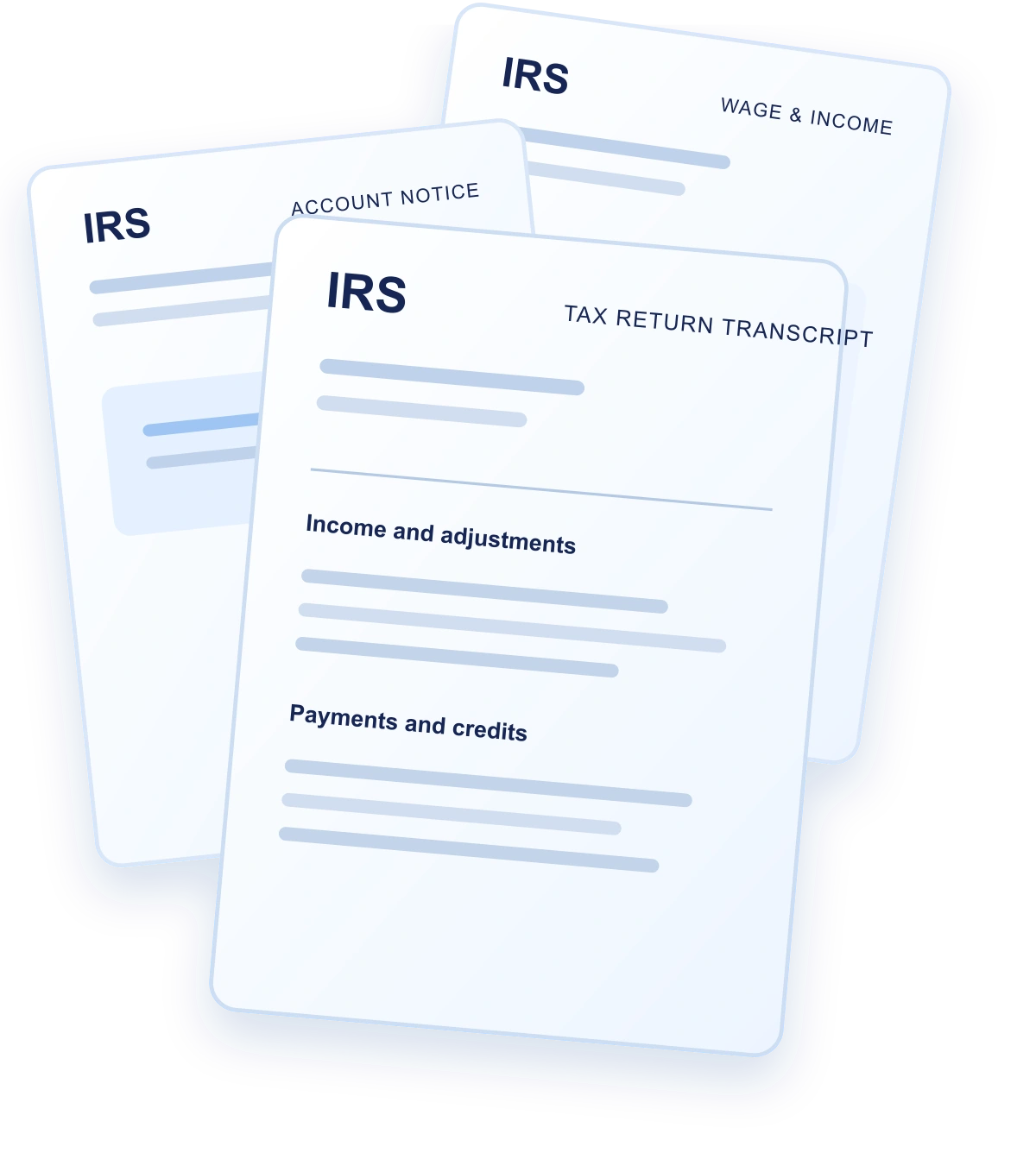
One account view
Organize records across tax years.
YOUR IRS ACCOUNT, MADE UNDERSTANDABLE.
Balances, filed returns, payments, notices, collection activity, and what changed—organized in one place.
Brevitax turns IRS transcript data into a clearer year-by-year account record so you can understand what is known, what may be missing, and what deserves attention.
7-day trial · card required · cancel anytime. Results in 24–48 hours.
Use the organized record yourself or bring it to a tax professional.
Reviewed August 2026 · Joseph Lancaster, Founder
Organize records across tax years.
See filings, payments, and changes.
Find years that need another look.
Start decisions from IRS records.
An IRS account review organizes available records around the questions taxpayers usually care about: what was filed, what is owed, what was paid, what changed, and what may still be unresolved.
Instead of reading isolated transcript lines or relying on one balance, review each tax year and account as part of a connected history.
Account transcripts are central because they show transaction activity for a specific tax period. Return transcripts and wage and income transcripts answer different questions and may add context when filing status or reported income matters.
Notices, payment confirmations, filed returns, and correspondence can also be relevant. No single record answers every question, so the source should match the fact being reviewed.
IRS accounts are organized by tax period and tax type. A taxpayer can be current for one year while another year still shows a balance, missing return, recent assessment, or unresolved posting issue.
A year-by-year view prevents an overall total from hiding the source of the problem. It also makes it easier to compare what you expected with what the IRS currently reflects.
Account activity can help confirm whether a payment or credit posted, which period received it, and whether the balance changed afterward. A notice can then be reviewed against the account date and later transactions.
This is especially useful when an old balance letter differs from a newer account total, when a payment appears missing, or when notices continue after action was taken.
Transcripts and notices may contain collection-related events, including certain lien, levy, installment-agreement, and currently-not-collectible codes. These signals can help identify areas that deserve closer review.
Available records may not show every current legal or enforcement fact. Active levies, wage garnishment, Revenue Officer contact, imminent deadlines, or payroll tax issues should not be evaluated from transcript codes alone.
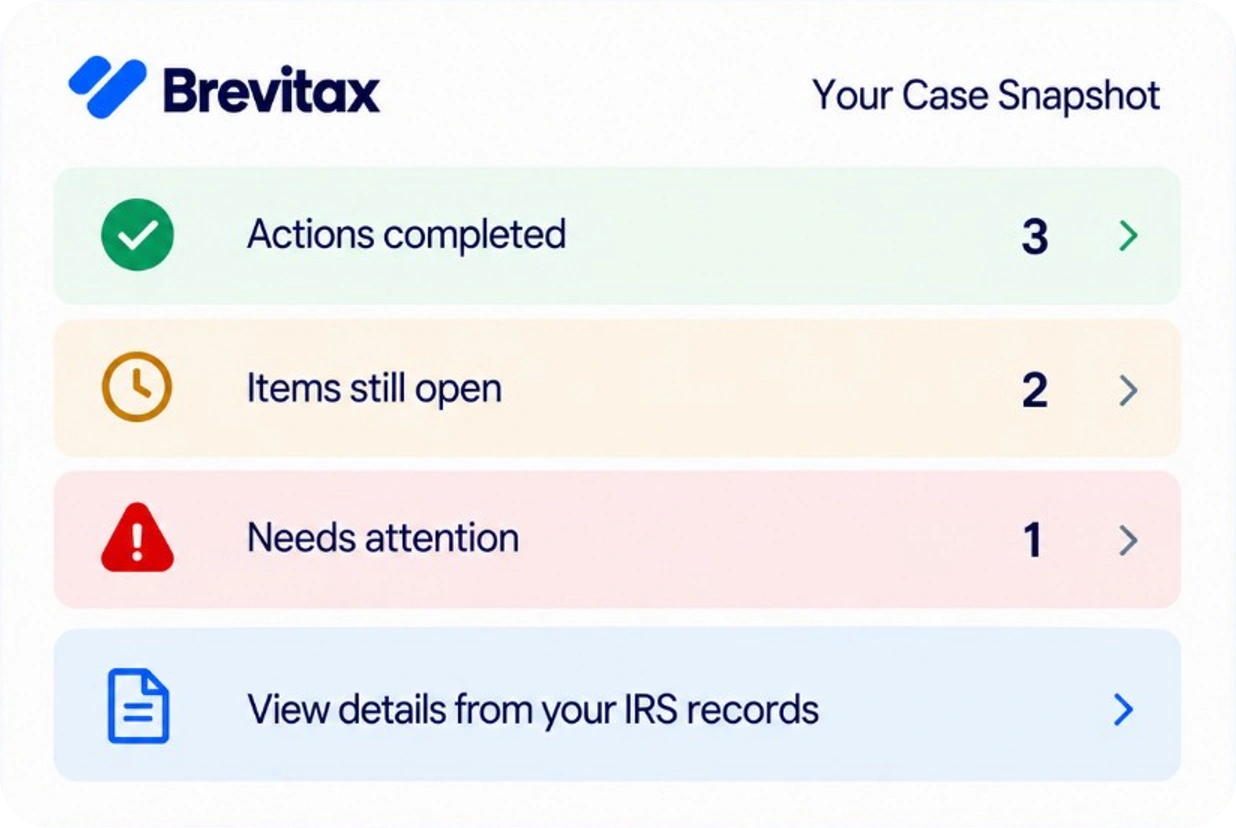
Brevitax converts transcript activity into an organized account view with balances by year, readable timelines, notice context, and clearer open items. It helps reduce the work of interpreting raw records without replacing the records themselves.
You can use that account view to understand your own situation, prepare better questions, monitor later changes, or give a CPA, enrolled agent, or tax attorney a more coherent starting point.
Brevitax is software that helps taxpayers organize and understand IRS account information. It is not a tax relief or debt settlement service and does not represent taxpayers before the IRS.
Obtain current IRS transcripts and review the appropriate account records by tax year and tax type. Include relevant notices, returns, and payment confirmations when those facts matter.
Account transcripts can show balances and activity for requested tax periods. Coverage depends on which records and years are obtained, so confirm that every relevant period is included.
It can show whether a return appears processed for a period. A recently submitted return may not appear yet, and prepared or mailed does not always mean processed.
Transcripts can contain collection-related transaction codes, but they may not show every current legal or enforcement fact. Review notices and direct IRS communications too.
No. Brevitax is independent software that organizes IRS account information supplied through supported records. It is not part of the IRS and does not represent taxpayers before the IRS.
Organize balances, filings, payments, notices, and account changes by year before deciding what needs to happen next.
Review My IRS AccountIf you received a notice or owe back taxes, begin with what the IRS has actually posted. Brevitax organizes account transcripts and explains enforcement posture before you commit to a program or firm.
Marketing pages summarize common situations. Your account may differ. Use a current transcript and, when appropriate, licensed representation before filing or agreeing to a collection alternative.